Nitric Oxide, Explained: Why Two Amino Acids Beat One
Nitric oxide is a signalling molecule that relaxes and widens blood vessels, and it is the shared target of two different amino acids in Jelly Rock's formula.
Pairing L-Citrulline with L-Arginine gives the pathway two entry points instead of one, which is a genuinely different design choice than most single-ingredient circulation products make.
What nitric oxide actually does
Nitric oxide is produced by the cells lining blood vessels and acts as a signal that tells surrounding smooth muscle to relax, a process called vasodilation. Wider blood vessels allow more blood, oxygen and nutrients to reach muscles and tissue, which is the underlying reason this pathway shows up in so many circulation-focused supplements.
Why L-Arginine alone has a limitation
L-Arginine is a direct precursor to nitric oxide, but a meaningful portion of orally supplemented L-Arginine is broken down in the gut and liver before it ever reaches the bloodstream — a limitation researchers call first-pass metabolism.
Why L-Citrulline solves that problem
L-Citrulline takes a different route: it is absorbed in the small intestine, converted to L-Arginine primarily in the kidneys, and largely bypasses the first-pass metabolism issue that limits direct L-Arginine supplementation. Research on this conversion pathway is indexed on PubMed.
Why a formula might include both anyway
Including both L-Citrulline and direct L-Arginine gives a formula two separate contributions to the same nitric oxide pool — the gradual, sustained contribution from L-Citrulline's conversion, plus whatever portion of the directly supplemented L-Arginine survives first-pass metabolism. Whether combining them produces a meaningfully larger effect than L-Citrulline alone is less thoroughly studied than either ingredient individually.
What determines whether it actually works
Clinical trials on L-Citrulline for circulation and exercise performance have generally used doses in the 6–8 gram range daily. That is a substantial amount for a gummy to deliver alongside five other active ingredients, which is why per-serving dosing matters so much for evaluating any finished product built around this pathway.
Applying this to Jelly Rock
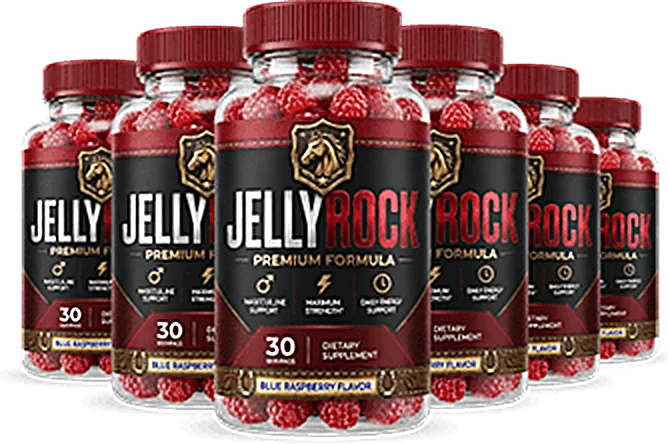
Jelly Rock includes both L-Citrulline and L-Arginine, a genuinely sound structural choice for a circulation-focused formula. The brand does not disclose milligram amounts for either, so whether the combined dose approaches research-relevant levels cannot be confirmed from the label. See our piece on undisclosed dosing for how to think about that gap.